Source Ceiling Mounted Led Honeycomb Lamp for Office, Retail, and Industrial Use
Find 30 ceiling mounted led honeycomb lamp options from China. Compare specifications like IP ratings, beam angles, and controller compatibility for general and industrial applications. Evaluate materials such as aluminum and PC, check voltage options, and review warranty terms to select the best lighting solution for your specific project needs and budget constraints.
Key considerations
Products List


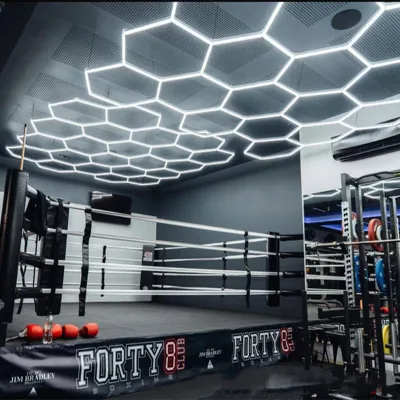







Comprehensive Sourcing Guide
Ceiling Mounted LED Honeycomb Lamp Sourcing Guide
Procurement teams must first distinguish between finished lighting fixtures and raw structural components when searching for honeycomb solutions. The market presents distinct product categories, ranging from complete LED assemblies with integrated drivers to bare aluminum honeycomb cores designed for custom fabrication. Buyers should verify whether the listing describes a functional lighting unit with specific beam angles and color temperatures or a structural material intended for further processing. This distinction is critical because the technical requirements, compliance needs, and integration efforts differ significantly between a plug-and-play ceiling fixture and a raw industrial component.
The observed product landscape includes items explicitly labeled as "Honeycomb Lights" with white emitting colors and pure white color temperatures, alongside "Aluminum Honeycomb Core" materials with customizable side lengths and thicknesses. Some listings indicate applications for general industry and car station lighting, while others focus on architectural integration. Sourcing strategies must align with the specific end-use, ensuring that the selected item matches the intended installation environment, whether it requires a pre-assembled unit with a 120-degree beam angle or a raw aluminum alloy sheet with specific foil thicknesses for custom manufacturing.
Product Scope and Observed Listing Signals
Buyers should scrutinize the product name and application tags to confirm the item's readiness for immediate installation. Listings for "Honeycomb Lights" typically feature working voltages of 220V or 110V and include controllers such as DMX, Artnet, or Glediator for advanced lighting control. These units often come with a 3-year warranty and are constructed from aluminum and PC materials, offering a waterproof grade of IP42 or IP55 depending on the specific model. Understanding these signals helps procurement teams identify products that are fully functional and ready for ceiling mounting without requiring additional driver or housing fabrication.
In contrast, listings for "Aluminum Honeycomb Core" focus on material specifications rather than lighting performance. These entries highlight customizable dimensions, such as thicknesses ranging from 2mm to 490mm and circle sizes from 1/25" to 9/16". The material is often specified as 3003 or 5052 aluminum alloy with surface treatments like spraying. Procurement decisions here depend on whether the buyer needs a finished lighting solution or a structural substrate for a custom project. Misinterpreting a raw core listing as a finished lamp can lead to significant delays and additional engineering costs during the integration phase.
Technical Specifications to Verify
Verification of electrical and optical parameters is essential to ensure compatibility with existing building infrastructure. Buyers must confirm that the working voltage matches the local grid, typically 220V or 110V AC, and check the power factor, which may be listed as 36W/m for linear applications. The color rendering index (CRI) and color temperature are critical for visual comfort; observed data suggests a CRI of 72.9 and a color temperature of 6000K for some units, while others offer pure white options. Ensuring these optical metrics align with the design intent prevents issues with color consistency and visual fatigue in the final installation.
Physical dimensions and mounting capabilities require precise validation against the architectural constraints of the project. The beam angle is a key specification, with observed values of 120 degrees suitable for general illumination, while the physical length of linear units can range from 0.44m to 1.2m. Installation methods vary, including ceiling, cable, or boom mounting, and the product may require specific PCB colors or controller compatibility. Buyers should also verify the waterproof grade, noting that some units are rated IP42 while others reach IP55, which dictates their suitability for different environmental conditions and ceiling types.
Compliance and Safety Documentation
Safety compliance is non-negotiable for ceiling-mounted electrical installations, requiring a thorough review of certification marks. The supply chain often includes products bearing CREE, CE, ETL, LVD, REACH, RoHS, and VDE certifications, which indicate adherence to international safety and environmental standards. Procurement teams must request valid test reports for these specific certifications to verify that the electrical components, such as drivers and LEDs, have been independently tested for fire safety and electromagnetic compatibility. Relying on unverified claims can expose the project to liability and regulatory non-compliance.
Beyond electrical safety, material safety and environmental regulations must be confirmed, particularly for products containing aluminum and PC materials. The presence of REACH and RoHS certifications suggests compliance with restrictions on hazardous substances, which is vital for indoor air quality and environmental sustainability. Buyers should ensure that the supplier provides documentation proving the absence of restricted substances in the aluminum alloy and the PC housing. This verification is especially important for projects in regions with strict environmental laws, where non-compliant materials can lead to rejected shipments or legal penalties.
Cost Drivers and Commercial Terms
Pricing in this category is heavily influenced by the level of customization and the complexity of the electronic components. Listings show a wide price range, from 1 to 299 USD, reflecting the difference between raw aluminum cores and fully assembled LED systems with advanced controllers. The inclusion of specific controllers like T1000s, K1000c, or Arduino-based systems adds significant value and cost to the final unit. Buyers should analyze the cost breakdown to understand whether the price includes the driver, the housing, and the control system, or if these are separate line items that will increase the total landed cost.
Minimum Order Quantities (MOQ) and lead times are critical commercial variables that affect project timelines and budget flexibility. The observed MOQ range spans from 1 to 1000 units, offering flexibility for small pilot projects but potentially requiring bulk commitments for large-scale deployments. Customization options, such as specific side lengths or surface treatments, often increase the MOQ and extend the lead time. Procurement teams must negotiate these terms early to ensure that the supplier can meet the project schedule without incurring excessive rush fees or compromising on quality due to accelerated production demands.
Supplier Qualification and Quality Control
Supplier qualification should focus on the manufacturer's origin and their specific production capabilities in the lighting sector. Many observed listings originate from Guangdong or Fujian, China, regions known for their extensive lighting manufacturing ecosystems. Buyers should verify the supplier's experience with aluminum honeycomb structures and LED integration, ensuring they have a track record of delivering consistent quality for similar projects. Checking for a dedicated R&D team capable of handling custom designs, such as specific PCB colors or controller integrations, is essential for complex procurement needs.
Quality control processes must be explicitly defined in the contract to mitigate the risk of defects in the final product. Given the 3-year warranty observed in some listings, suppliers should have robust testing protocols for waterproofing, electrical safety, and optical consistency. Buyers should request a quality assurance plan that includes pre-shipment inspections, specifically checking the IP rating, beam angle uniformity, and the functionality of the dimming and control systems. Establishing clear acceptance criteria and defect tolerance levels ensures that the delivered products meet the project's technical and aesthetic requirements before they are installed.
Long-Term Procurement Checks
Sustainability and lifecycle management are key considerations for long-term procurement strategies involving ceiling-mounted lighting. The observed working lifetime of 20000 hours for LED sources suggests a long service life, but buyers must verify the actual degradation rates and the availability of replacement parts. Ensuring that the supplier can provide spare controllers, drivers, and LED modules for the duration of the warranty period is crucial for maintaining operational continuity. A robust after-sales support plan should be part of the procurement agreement to address any potential failures or performance issues.
Future scalability and standardization should also be evaluated to prevent vendor lock-in and ensure compatibility with evolving lighting technologies. Buyers should assess whether the current product specifications, such as the 120-degree beam angle or specific voltage requirements, align with future energy efficiency standards and smart building integration trends. Maintaining a diverse supplier base and keeping detailed records of technical specifications will facilitate easier replacements or upgrades. This proactive approach ensures that the lighting infrastructure remains adaptable and cost-effective over its entire operational lifespan.
FAQs
What certifications do ceiling mounted led honeycomb lamps have?
These lamps typically hold CREE, CE, ETL, LVD, REACH, RoHS, and VDE certifications. These credentials ensure compliance with international safety and environmental standards for general lighting applications. Buyers should verify specific documentation with suppliers to confirm that the listed certifications apply to the exact model and batch being sourced for their project requirements.
Can ceiling mounted led honeycomb lamps be customized?
Yes, customization is available for these products. Buyers can request specific side lengths, wide sizes, and surface treatments like spraying. The aluminum honeycomb core and LED components can often be tailored to fit unique architectural designs. This flexibility allows for bespoke lighting solutions that meet precise aesthetic and functional requirements for commercial or industrial spaces.
What is the IP rating for these honeycomb lights?
The IP rating varies by model, with some units rated at IP42 and others at IP55. The IP42 grade offers protection against solid objects and dripping water, while IP55 provides dust protection and low-pressure water jets. Selecting the appropriate rating depends on the installation environment, ensuring durability and safety for both indoor general and industrial applications.
How long is the warranty for ceiling mounted led honeycomb lamps?
The standard warranty period for these lamps is typically three years. This coverage protects against manufacturing defects and ensures product reliability during initial operation. Buyers should confirm the specific warranty terms with the supplier, as conditions may vary based on the model, usage, and regional support policies provided by the manufacturer in China.
What controllers are compatible with these LED honeycomb lights?
Compatible controllers include T1000s, K1000c, T-300K, Arduino, Glediator, DMX, and Artnet systems. These options allow for advanced lighting control, including dimming and dynamic color effects. The choice of controller depends on the desired level of automation and integration with existing building management systems, ensuring seamless operation for complex lighting designs.
What is the working voltage for these ceiling mounted lamps?
The working voltage is typically AC 220V with a tolerance of plus or minus 10%, or 110V. This flexibility allows installation in regions with different electrical standards. Buyers must ensure their local power supply matches these specifications to prevent damage. Proper voltage matching is critical for maintaining the 20,000-hour working lifetime and optimal performance of the LED chips.